To tackle the environmental challenges facing the nation’s capital, a non-governemental organisation (NGO) has called on the Minister of FCT, Nyesom Wike, to reactivate environmental court and tribunals.
The NGO, the CRUX Environmental Rights, Advocacy and Development Foundation (CERADF), stated this in a letter written to the minister.
The letter is titled, “Request for the Reactivation of Environmental Courts and Tribunals in the Federal Capital Territory (FCT), Abuja.”

It reads: “The CRUX Environmental Rights, Advocacy and Development Foundation (CERADF) respectfully presents this formal request for the reactivation and strengthening of dedicated Environmental Courts and Tribunals within the Federal Capital Territory (FCT).
“Specifically, we request the establishment of a central Environmental Court within the High Court of the FCT, as well as Environmental Tribunals across all six Area Councils.
“This call is made pursuant to relevant constitutional and statutory provisions and in recognition of the urgent environmental challenges confronting the nation’s capital.”
According to CERADF, the Abuja Environmental Protection Board (AEPB), established in 1997, introduced mobile courts in May 2022 to address environmental infractions.
It, however, said that these measures had proven inadequate for the scale and complexity of the environmental crisis now facing the FCT.
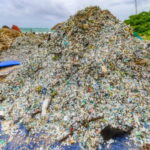
“Recent CERADF’s field monitoring across Gwarinpa, Utako, Mpape, Kubwa, Nyanya, Karu, Lugbe, Kuje, Apo Mechanic Village, and even parts of the Central Business District reveals widespread waste accumulation and poor sanitation.
“These conditions have resulted in: Overburdened AEPB and waste-management agencies; Blocked drainages and recurrent flooding; Increased rodent infestation and heightened public-health risks,” it said.
Besides, it said the situation had also resulted in “escalating pollution and offensive odours; reputational damage to Abuja as Nigeria’s administrative and diplomatic capital; weak enforcement due to slow court processes and insufficient deterrent penalties.”
CERADF said while public sensitisation efforts are ongoing, these cannot succeed without a dedicated judicial framework that would ensure speedy trials, consistent application of environmental laws, and firm sanctions for violators.
The NGO, therefore, gave some recommendations which include collaboration with the Chief Judge of the High Court of the FCT, among others.
By Taiye Agbaje