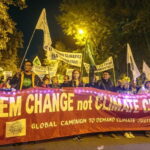
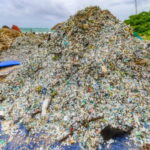
The Nigerian Conservation Foundation (NCF), in partnership with the Ford Foundation, has urged the Federal Government to introduce policies mandating supermarkets to channel proceeds from plastic bag charges to climate financing.
The NCF Director-General, Dr Joseph Onoja, made the call at the Youth-Focused Climate Event on Saturday, November 29, 2025, at Ibeju-Lekki in Lagos.
Onoja was represented at the event by the NCF Programme Development Manager, Mr Joshua Danzi.

Onoja noted that climate change was already reshaping Nigeria’s environment, affecting farmlands, waterways, and coastal communities.
He observed that many supermarkets and restaurants have begun charging customers for plastic bags, but without a structured government mandate on how the collected funds should be used.
“These charges should not just serve as revenue for businesses.
“They must be directed into climate financing or environmental sustainability projects.
“Nigeria, as a signatory to the Paris Agreement, must ensure that every effort contributes to long-term climate solutions,” he said.
According to him, Nigeria needs structured policies especially on plastic usage to strengthen climate financing and secure environmental sustainability for future generations.
He underlined the importance of grassroots engagement to curb plastic pollution in the country.
Onoja noted that the collaboration with the Ford Foundation aims to make climate education more relatable, especially for young people in vulnerable communities.
He also highlighted the need for stronger national policy direction, particularly regarding plastic pollution.
The event was organised to inspire young environmental advocates through sports, art, and creative expression.
It was also part of activities to mark the Ford Foundation’s 65th anniversary.
The event gathered schoolchildren, teachers, community leaders, and environmental advocates for a day of interactive sessions.
This is aimed at deepening awareness about climate change and empowering young people to become frontline voices in climate justice.
A climate advocate, Mr. Shittu Usman, presented a detailed talk on the impact of climate change on agricultural productivity, rising fire outbreaks, and their links to global warming.
Student voices dominated the programme, reinforcing the urgency of the climate crisis.
Mr. Kasheen Abdulrasheed of Community Junior High School, Ibeju-Lekki, emphasised that young people must take proactive steps to protect the environment, starting with reducing plastic waste.
Miss Elizabeth Lawal of Magbon Alade Junior Grammar School, Ibeju-Lekki, urged policymakers to stop deforestation, protect forests and oceans, and enforce regulations on waste disposal.
Students from Refiners School, Lekki, presented “The Cry of the Waters,” a gripping narrative about marine pollution and community responsibility.
The competitive segments added energy to the day.
Students described the programme as transformative, with Miss Annu Akinwalere of Magbon Alade Junior Grammar School noting that the outreach had helped them understand climate issues more clearly and inspired them to act.
By Olaitan Idris